
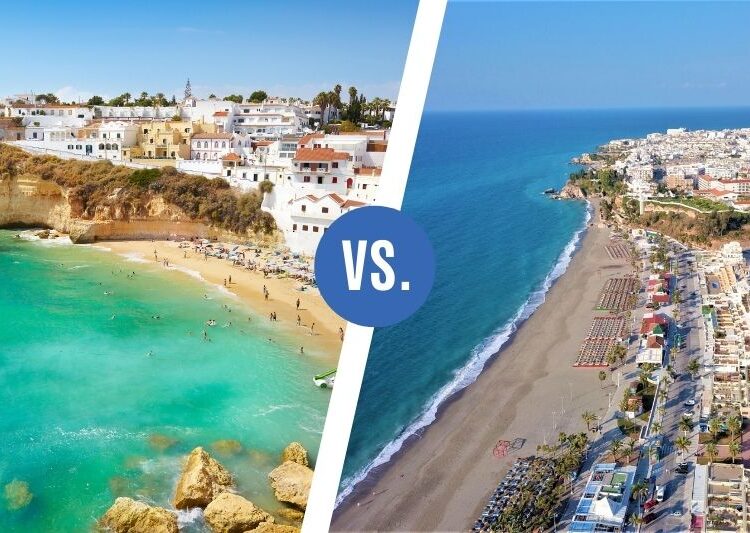
Retirement And Property Costs In The Algarve, Portugal, Versus Costa Del Sol, Spain
We have named Portugal's Algarve region as the world's best place to live or retire overseas...
Read moreDetails

[vc_section full_width=”stretch_row_content” content_placement=”top” el_class=”countryhub-header ss-style-triangles remove_vc_row” css=”.vc_custom_1708033473823{background-image: url(https://www.liveandinvestoverseas.com/wp-content/uploads/2017/03/Infrastructure-In-Costa-Rica-small.jpg?id=39155) !important;background-position: center !important;background-repeat: no-repeat !important;background-size: cover !important;}”][vc_row][vc_column width=”1/2″ el_class=”headerTitle_cohub”][vc_custom_heading text=”Infrastructure In Costa Rica” font_container=”tag:h1|text_align:center|color:%23ffffff” use_theme_fonts=”yes” el_class=”cohub_title”][/vc_column][vc_column width=”1/2″][vc_raw_html el_class=”cohub_top_optin”]JTVCd2Jjcl9odG1sX3NuaXBwZXQlMjBpZCUzRCUyMjgzNDcwJTIyJTVE[/vc_raw_html][vc_raw_html]JTNDJTIxLS1TdHlsZSUyMHJlc3BvbnNpdmUtLSUzRSUwQSU1QndiY3JfY3NzX3NuaXBwZXQlMjBpZCUzRCUyMjEwNDAzOSUyMiU1RCUwQSUzQyUyMS0tRW5kJTIwc3R5bGUlMjByZXNwb25zaXZlLS0lM0U=[/vc_raw_html][/vc_column][/vc_row][/vc_section][vc_row full_width=”stretch_row_content” gap=”30″ content_placement=”middle” vc_row_background=”” bg_type=”bg_color” css=”.vc_custom_1680193871353{background-color: #e5e5e5 !important;}” bg_color_value=”#d7eafd”][vc_column][vc_row_inner content_placement=”middle”][vc_column_inner el_class=”page-resp” css=”.vc_custom_1680193190126{background-color: #ffffff !important;background-position: center !important;background-repeat: no-repeat !important;background-size: contain !important;border-radius: 1px !important;}”][vc_column_text][/vc_column_text][vc_raw_html]JTNDJTIxLS1DYXJkJTIwYXV0aG9yJTIwTGllZi0tJTNFJTBBJTBBJTVCd2Jjcl9odG1sX3NuaXBwZXQlMjBpZCUzRCUyMjEwNDUyNyUyMiU1RCUwQSUwQSUzQyUyMS0tJTIwRW5kJTIwY2FyZCUyMGF1dGhvciUyMExpZWYtLSUzRQ==[/vc_raw_html][vc_custom_heading text=”Infrastructure In Costa Rica” google_fonts=”font_family:Open%20Sans%3A300%2C300italic%2Cregular%2Citalic%2C600%2C600italic%2C700%2C700italic%2C800%2C800italic|font_style:400%20regular%3A400%3Anormal”][vc_column_text css=”.vc_custom_1708033580859{margin-top: 0px !important;padding-top: 0px !important;}”]
The infrastructure in Costa Rica today is almost no better than when it rolled out the foreign retiree welcome mat all those years ago. Infrastructure has not met economic growth numbers. Ineffective and insufficient maintenance and investment efforts are the main offenders.
According to the 2016-2017 Global Competitiveness Report published by the World Economic Forum, Costa Rica ranks at position 54 out of 138 countries. That’s not a bad number, but it shows it still lags behind of other countries in the region like Panama (42), Chile (33), and Mexico (51). It’s ranking for infrastructure is 67th, up 4 places since last year. Infrastructure was the 5th worst performing score for Costa Rica, the lowest being it’s market size (83rd place).
[/vc_column_text][vc_custom_heading text=”Transportation in Costa Rica” google_fonts=”font_family:Open%20Sans%3A300%2C300italic%2Cregular%2Citalic%2C600%2C600italic%2C700%2C700italic%2C800%2C800italic|font_style:400%20regular%3A400%3Anormal”][vc_column_text css=”.vc_custom_1708033670850{margin-top: 0px !important;padding-top: 0px !important;}”]
Transportation is a major concern of infrastructure in Costa Rica today. There’s an ongoing debate that the government must promote private investment to keep up with the country’s growth. And not all people share that vision. Still, there are strong promoters of the private investment movement, and Costa Rica is slowly developing their transportation services.
The road network is substantial, with more than 35,705 kilometers (22,187 miles) of roads, but most of them in poor conditions. There are only 12% and 56% of paved roads for local and national roads. There are projects set to reinforce road systems, but the low investment of the government (only 1.1 of the annual GDP) is insufficient to support the demand. As of 2016, there are 5 projects for road and transport development, 3 being in operation.
[/vc_column_text][vc_custom_heading text=”Driving And Roads In Costa Rica” font_container=”tag:h3|text_align:left” google_fonts=”font_family:Open%20Sans%3A300%2C300italic%2Cregular%2Citalic%2C600%2C600italic%2C700%2C700italic%2C800%2C800italic|font_style:400%20regular%3A400%3Anormal”][vc_column_text css=”.vc_custom_1708033699762{margin-top: 0px !important;padding-top: 0px !important;}”]
If you are considering living in Costa Rica, driving can be crucial in order to get around towns and cities. Normally, an SUV or some other type of off-road vehicle is recommended to navigate Costa Rica’s roads. Roads are in so bad shape, in fact, they rank as 125th for Quality of Roads under the infrastructure category.
Particular concerns include narrow roads, potholes, and unpaved roads. Reckless driving is present here as well as most of Latin America, so driving defensively is paramount. Still, driving should be your first option for transport.
In Costa Rica, you get the perk of using your national driver’s license for up to three months since arriving. After that, expats can apply for a local license, the process being simple and very affordable.
[/vc_column_text][vc_custom_heading text=”Public Transportation” font_container=”tag:h3|text_align:left” google_fonts=”font_family:Open%20Sans%3A300%2C300italic%2Cregular%2Citalic%2C600%2C600italic%2C700%2C700italic%2C800%2C800italic|font_style:400%20regular%3A400%3Anormal”][vc_column_text css=”.vc_custom_1708033727761{margin-top: 0px !important;padding-top: 0px !important;}”]
Basically, this is why we recommend having your own car. Public transportation infrastructure can be resumed as quite painful. San José is the transportation hub of the country, but there’s no central bus terminal. Offices lay around the city, and while they are cheap, the service is not first-rate. They are reliable, though, and the longest national route costs less than $20. The further you are from San José, the fewer transportation you find.
There are two types of buses: colectivo, and directo. Colectivos are cheaper but make stops along the way, while the directos don’t. Trips usually have rest stops if there are more than for 4 hours because buses don’t have toilets.
Taxis in San José have marías, also known as meters, and it is illegal for the drivers not to use them.
Yet, outside the capital, most taxis don’t have meters and you will have to engage in bargaining.
Be ready to fend off the “gringo prices”.
[/vc_column_text][vc_raw_html]JTNDcCUzRSU1QmNwX3BvcHVwJTIwZGlzcGxheSUzRCUyMmlubGluZSUyMiUyMHN0eWxlX2lkJTNEJTIyODc1NTIlMjIlMjBzdGVwX2lkJTIwJTNEJTIwJTIyMSUyMiU1RCU1QiUyRmNwX3BvcHVwJTVEJTNDJTJGcCUzRQ==[/vc_raw_html][vc_custom_heading text=”Airports And Flying In Costa Rica” font_container=”tag:h3|text_align:left” google_fonts=”font_family:Open%20Sans%3A300%2C300italic%2Cregular%2Citalic%2C600%2C600italic%2C700%2C700italic%2C800%2C800italic|font_style:400%20regular%3A400%3Anormal”][vc_column_text css=”.vc_custom_1708033772651{margin-top: 0px !important;padding-top: 0px !important;}”]
Domestic flights are relatively cheap and offer a more convenient way of traveling to remote areas.
There are 48 main airports, only 4 being international. Two of them are in San José, while the other two are in Limón and Guanacaste.
[/vc_column_text][vc_custom_heading text=”Communications in Costa Rica” google_fonts=”font_family:Open%20Sans%3A300%2C300italic%2Cregular%2Citalic%2C600%2C600italic%2C700%2C700italic%2C800%2C800italic|font_style:400%20regular%3A400%3Anormal”][vc_column_text css=”.vc_custom_1708033807202{margin-top: 0px !important;padding-top: 0px !important;}”]
For many years, the whole phone and internet service was under the control of the Instituto Costarricense de Electricidad (ICE). But with the Central American Free Trade Agreement taking hold, that was no more.
Internet adoption was fast after the change of millennia, and while certainly not at the level of first world countries, internet service is found nationwide.
[/vc_column_text][vc_custom_heading text=”Internet Service In Costa Rica” font_container=”tag:h3|text_align:left” google_fonts=”font_family:Open%20Sans%3A300%2C300italic%2Cregular%2Citalic%2C600%2C600italic%2C700%2C700italic%2C800%2C800italic|font_style:400%20regular%3A400%3Anormal”][vc_column_text css=”.vc_custom_1708033842256{margin-top: 0px !important;padding-top: 0px !important;}”]
One of the most asked questions by retirees can be: “Is there going to be reliable internet connection there?” The answer depends on whether you need exceptional internet speed and reliability.
Near the main cities, you can get high-speed internet that may be almost on par as back in the states, for a price. As of 2017, most internet service companies offer plans that range from as low as 2 megabytes per second of download speed, all the way to 100mb/s. The price for a 100mb/s connection roams near the $230 mark a month.
Regarding reliability, the quality of service depends on how close you are to the metropolitan areas. Normally, the service is quite reliable.
You might experience one to two outages every now and then, and they are generally fixed quickly. The only way this deal would be a no-go for you depends on if you simply cannot have downtime.
[/vc_column_text][vc_custom_heading text=”Mobile Service In Costa Rica” font_container=”tag:h3|text_align:left” google_fonts=”font_family:Open%20Sans%3A300%2C300italic%2Cregular%2Citalic%2C600%2C600italic%2C700%2C700italic%2C800%2C800italic|font_style:400%20regular%3A400%3Anormal”][vc_column_text css=”.vc_custom_1708033879547{margin-top: 0px !important;padding-top: 0px !important;}”]
While being in Costa Rica, it is advisable to buy a local SIM card and use it with your unlocked phone from the states. Roaming services can be as costly as $4 per second, and many local companies that offer international calls at much better prices.
The service also can get from spotty to non-existent if you are venturing to rural areas.
[/vc_column_text][/vc_column_inner][/vc_row_inner][/vc_column][/vc_row][vc_section el_class=”ss-style-bigtriangle”][vc_row][vc_column][vc_raw_html]JTVCd2Jjcl9odG1sX3NuaXBwZXQlMjBpZCUzRCUyMjc2MTYzJTIyJTVE[/vc_raw_html][/vc_column][/vc_row][/vc_section][vc_row full_width=”stretch_row” vc_row_background=”” css=”.vc_custom_1522160265469{background-color: #e5e5e5 !important;}”][vc_column][vc_empty_space height=”1rem”][vc_custom_heading text=”Popular Articles” font_container=”tag:h2|text_align:center|color:%23000000″ use_theme_fonts=”yes” el_class=”cohub_body_h2″][vc_empty_space height=”.8rem”][vc_row_inner][vc_column_inner width=”1/3″]
We have named Portugal's Algarve region as the world's best place to live or retire overseas...
Read moreDetailsWe have named Portugal's Algarve region as the world's best place to live or retire overseas for eight years running....
Read moreDetailsWe have named Portugal's Algarve region as the world's best place to live or retire overseas for eight years running....
Read moreDetailsGun laws vary in every country. It is important to understand that gun ownership is a privilege, not a right. Gun laws are strictly enforced, and draconian measures apply for anyone found with an unlicensed gun or ammunition. You can apply for a gun permit as a legal resident in Panama, Belize, Nicaragua, and Ecuador. You’ll be limited in each case as to the number of guns you can own and also restricted as to the types of weapons you can keep, but...
Read moreDetails




Sign up to receive the FREE daily e-letter, Overseas Opportunity Letter and we’ll immediately email you our editors’ latest research report…
RETIRE OVERSEAS AND LIVE LIKE ROYALTY
