


Living Costs in Zagreb
[wbcr_snippet id=”191377″]
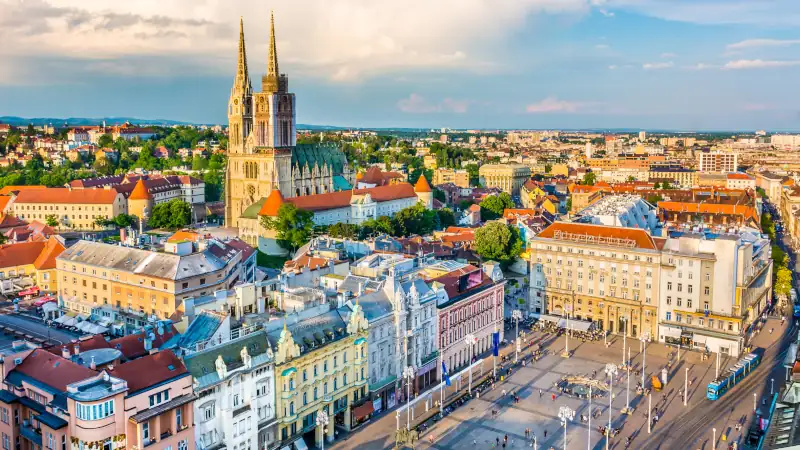
Zagreb serves as Croatia’s key transportation center, where Central Europe, the Mediterranean, and Southeast Europe converge. This makes the Zagreb region the heart of the country’s road, rail, and air systems.
[wbcr_snippet id=”175851″]
Also, the city is also recognized for its varied economy, excellent living standards, and a wide range of museums, sports, and entertainment activities.
Croatia is affordable. Don’t get me wrong, it’s not comparable to, say, India, but it certainly offers a cost of living that rivals most livable countries. And, Croatia adopted the euro at the start of 2023.
“My daughter goes to the theater once a month for US$5 to US$7.40,” says Karl Gillingham, who arrived there from London five years ago. School, too is less expensive in Zagreb. “A kindergartner in the UK might pay US$1,212 a month for a good education compared to US$250 at the international kindergarten in Zagreb—or as little as US$90 at the local school—which offers a very good education as well.”
If you are an active family, the good climate and green spaces combined with low prices offer ample opportunities for healthy living.
You can roller-blade, ice skate, sail, or ski all for much less than you would in neighboring countries.
The chair lift ride, for example, is only US$4 one way, US$5 round trip.
Zagreb also has a terrific public transportation system, and you can purchase a Zagreb Card for up to 50% savings on transportation, museums, theaters, hotels, and restaurants. The three-day card is US$16; the 24-hour card is US$12.
Trams run frequently within the city; buses travel inside and outside the city. The funicular runs to Zagreb’s higher points; a ticket is only US$2 at a kiosk/a day pass is US$4.
[wbcr_snippet id=”191363″]
Cost Of Living In Zagreb, Croatia
Since 1994 the currency here was the kuna, abbreviated kn or HRK. But, at the start of 2023, Croatia adopted the euro.
Credit cards are often accepted, but always have cash on hand as well.
| Item | Costs |
|---|---|
| A local beer | US$2.16 to US$3.60 |
| Sodas (Fanta and Coke) | US$2.16 |
| Tea or coffee in café | US$1.50 to US$2.70 |
| Pizza or pasta dish | US$6.40 to US$10 |
| A business lunch in a fancy restaurant (including drink) | US$27 to US$35 |
| Bottle of wine in store | US$4.60 to US$19 |
| Double room at private inn | US$55.22 |
| Double room at hotel | US$78.30 to US$391.60 |
| Average restaurant meal for two with wine | US$19 |
| One-and-half hour bus or tram ticket | US$2.44 |
| 72-hour Zagreb card for unlimited transportation | US$17.20 |
| Hour at internet café | US$3 to US$7.20 |
| Bread | US$1.16 to US$3.50 |
| One-hour bike rental | US$3.60 |
| Milk (per gallon) | US$3.73 |
| Beef (per pound) | US$3.85 to US$6.85 |
| Oranges | US$0.79 per pound |
| Chicken (per whole chicken) | US$5.85 |
| International kindergarten | US$250 |
| Local school | US$90 |
| The American international school | US$26,093/year |
Asked about shopping, an expat explains: “There are only a couple of multiplexes, which is underwhelming when you consider other cosmopolitan cities. Still, you can find anything you need here. Also, it’s not as cheap as people think…especially if you come here from the United States and the weak dollar. It’s certainly not as cheap as it once was.”
Get a clear breakdown of everyday expenses in Croatia—including housing, utilities, groceries,
transportation, and healthcare—so you can budget accurately before you make the move.
[wbcr_snippet id=”191271″]
Full Guide: Cost of Living in Croatia
[wbcr_snippet id=”175851″]