


Coley and his wife weren’t worried about money, making ends meet, or how they’d pay for retirement.
Coley was making a great living, the young couple and their two small children were enjoying a fully appointed life in Washington, D.C., and retirement was decades away. Looking ahead, their lives seemed to promise lots more of the same—more earnings and an even more comfortable lifestyle as they continued to work hard and make their way up the D.C. ladder. They had achieved, at early ages, the life that many Americans dream about.
Only it wasn’t working for them.
From their position in the U.S. capital, they had an insider’s view of what was going on and, from their perspective, what was going wrong. This was 10 years ago, and, after a lot of research and months of soul-searching, Coley and his wife, in their mid-30s, scooped up their two little ones and opted out.
“We wanted to get out while we were still young enough to remake our lives and our children’s futures in a way that made more sense to us.”
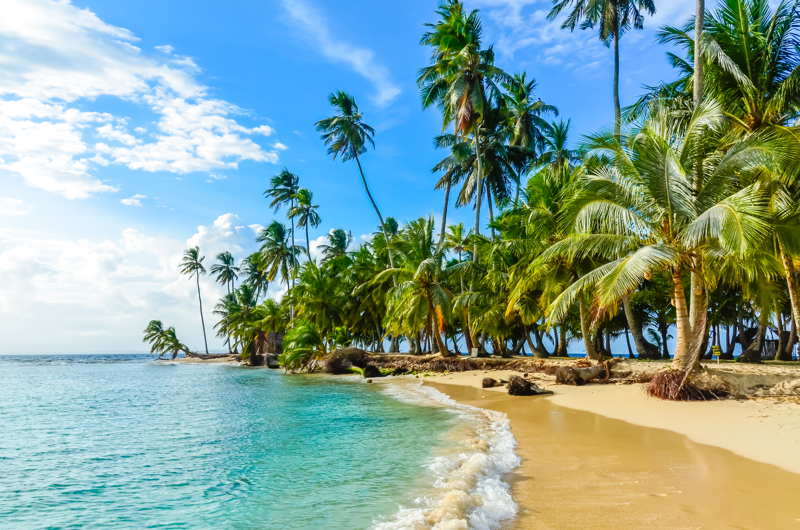
Coley and his young family hopped a flight from the American capital to the Panamanian one, where, months before, they’d purchased a house on the beach. They had to pull the trigger on their plan, because their house back in the States had sold. Yet, they discovered, their new home on the coast outside Panama City wasn’t finished yet. Arriving in Panama, the little family checked into the Intercontinental Hotel.
“We were at the Intercontinental for weeks,” Coley explains. “I would wake up in the middle of the night in a cold sweat. What had I done? What was I doing? We were living in a hotel in a Third World city with two toddlers, for crying out loud. Burning through our savings. No one could promise when our house would be ready for us to move in. I thought I’d made the biggest mistake of my life.”
Today, more than a decade later, Coley is confident that moving his family to Panama was the smartest thing he could have done at the time and that, if he hadn’t done it then, he’d do it today for sure.
“I look at what’s going on back in the States,” he says, “and I know we made the right choice. I see very bad times ahead for my country. I think my family and I can do better for ourselves in this life we’re creating for ourselves.”
In the time since they took their leap of faith, Coley and his wife have welcomed a new member into their family (their third child was born in Panama City), they’ve started businesses, including a school in the area where they’re living because no international school existed anywhere nearby and, as Coley explains, “we got tired of homeschooling the kids,” and they’ve launched a sustainable community, a place where like-minded folks can work together to build the lives and the futures they want.
“I’m back in the States regularly,” Coley explains. “I travel to D.C. every month to work with my consulting clients. When we meet, all they want to talk about is my life here in Panama.
“’What’s Panama really like?’… ‘Do you have any regrets?’ they want to know. ‘Man, I wish I could do it,’ they say.
“’Boy, Coley, you’ve figured this out. Do you think I could do it, too? Do you think my family and I could make that kind of a move, too?’
“There’s so much unhappiness and uncertainty in the United States right now, especially in D.C. I think people in that part of the country are at the epicenter of a growing recognition that things are out of control.
“What I realized years ago was that nobody was going to get things back under control anytime soon. Our only choice, each of us, is to take control of our own lives. I say this to friends and clients back in D.C. today, and they agree. They see this truth as well as I do. But they’re scared, intimidated.
“I understand. I was scared, too, when the realization first set in for me.”
Coley is an impressive, resourceful, resilient guy. Lief and I are looking forward to getting to know him better and appreciate the opportunity he’s presented to work together as he continues to develop his vision for how to help folks like him opt out and start over, in Panama and beyond, just like he did.
Kathleen Peddicord
This article was first published in 2019 and has been recently updated.